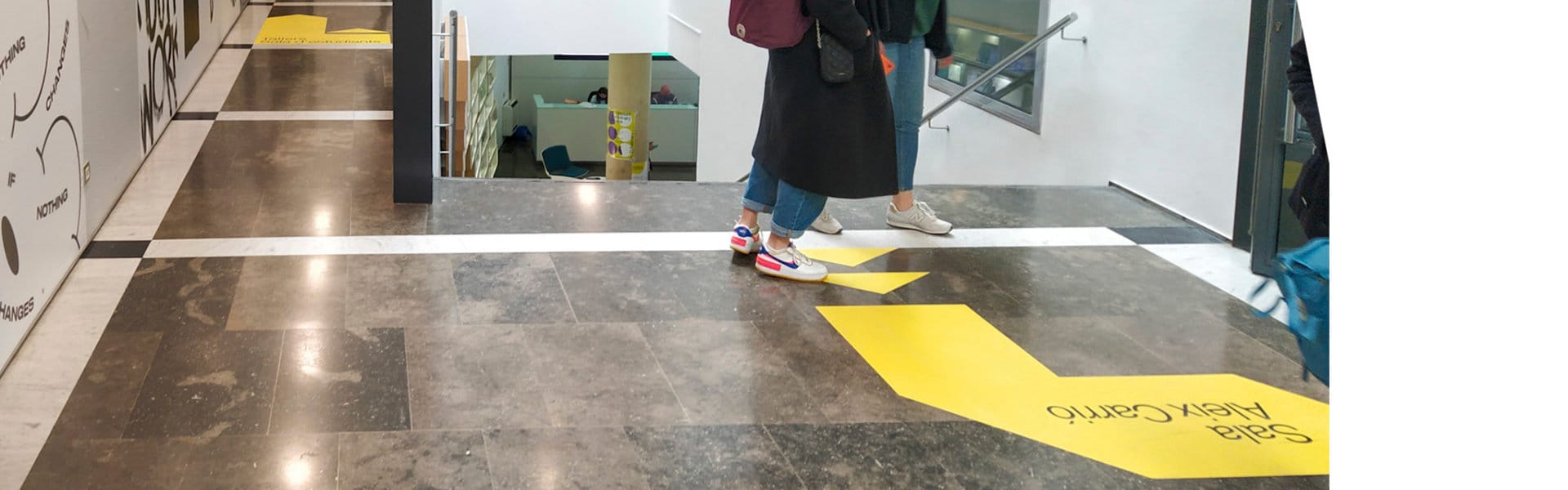
Floors are an advertising surface frequently used by many brands. The possibilities they offer are numerous, although they are sometimes overlooked due to the belief that graphic materials such as self-adhesive floor vinyl have a very short lifespan after installation or limited resistance.
What is floor vinyl?
Floor vinyl is printed on white PVC and can include a protective laminate that provides a non-slip and durable finish, allowing people to walk safely across its surface.
It can easily adapt to any format—standard or die-cut—and to different design needs, from small signage graphics to large surfaces. It is ideal for indoor signage or for high-traffic areas to promote offers at the point of sale, including decorative floor graphics.
It offers durability, strong resistance and excellent adhesion.
Recommended types of self-adhesive floor vinyl
- Monomeric vinyl Self-adhesive vinyl of approximately 100 microns, ideal for preventing corners or edges from lifting thanks to its adhesion properties. Recommended for short- and medium-term campaigns.
- Polymeric vinyl Vinyl designed for longer-term promotions, offering greater resistance than monomeric vinyl. Suitable for indoor and outdoor applications due to its ability to withstand temperature variations.
Applications of decorative floor vinyl
Printing on monomeric or polymeric self-adhesive vinyl can have multiple applications depending on the location and type of surface (smooth, textured, etc.).
- Large spaces or warehouses Public-access establishments that need to mark zones or guide visitors along specific routes.
They also add decorative value to a space while maximising the visibility of temporary promotions.
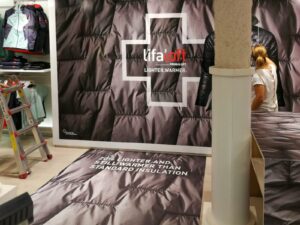
- Point of sale Floor advertising placed directly at the point of sale, near the products or services being promoted, or in strategic locations where potential customers frequently pass, such as near the store exit.
It acts as a constant reminder of existing offers, ensuring the promotion remains visible in the consumer’s mind.
- Outdoor use Floor vinyl can also be used to mark routes or directions, for example in bus or train stations. In locations where it is necessary to control the flow of people, it can be used to define areas and guide visitors to customer service points.
Advantages of decorative floor vinyl printing for businesses
- Resistance Regardless of its friction level, floor vinyl maintains its properties over time.
- Installation Thanks to its adhesive backing, the vinyl can be applied to almost any type of surface.
- Maintenance It is a waterproof material that can be cleaned easily using water and a non-abrasive floor cleaner.
If you need large-format printed graphics in floor vinyl and are unsure which option best suits your needs, our commercial team will help you choose the most suitable solution so that your idea becomes a valuable proposal for your business.
In addition, we have a specialised team that can handle the on-site installation of customised self-adhesive floor vinyl. Contact us.