In the world of large-format printing, designs can be produced through direct or indirect printing on rigid substrates or flexible substrates.
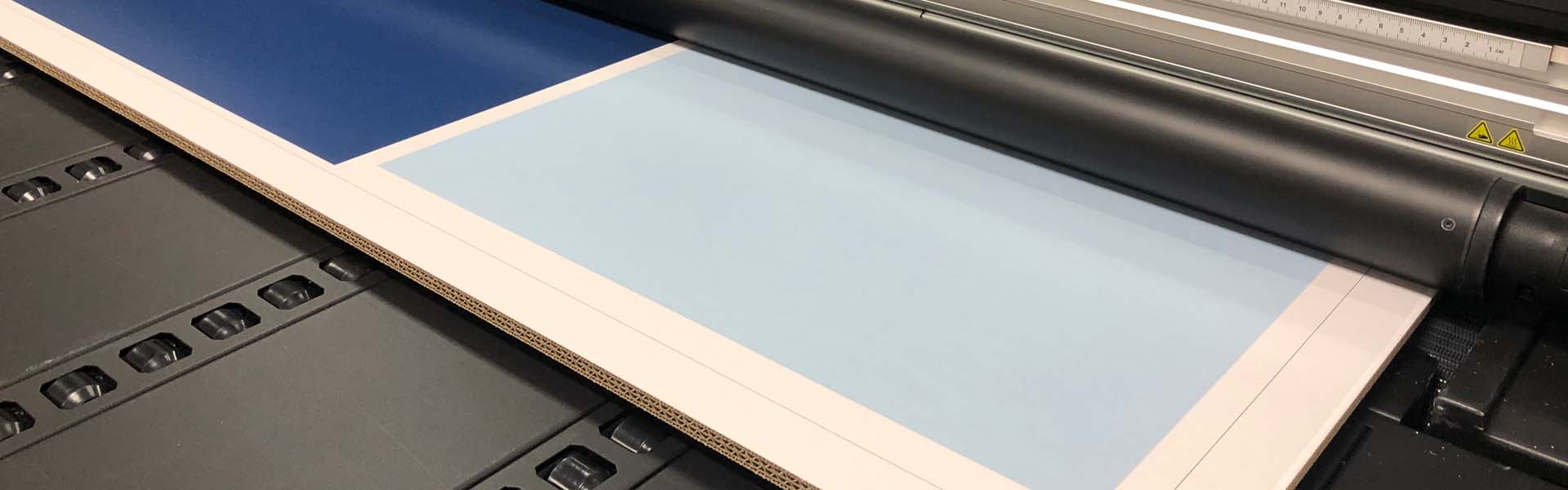
Printing on rigid substrates is possible thanks to industrial production plotters, which allow us to achieve high-quality results quickly and efficiently.
What is a rigid substrate?
A rigid substrate is a homogeneous and compact structure. This material is sustainable and environmentally friendly. Printing on rigid substrates delivers a high-quality result with sharp images and vibrant colours.
Direct digital printing on large-format rigid substrates requires a precise technique that guarantees the quality of the final result. Rigid printing materials are an excellent complement for signage, offering a wide range of materials, from foam board (lightweight rigid display panel) to acrylic (PMMA).
Types of rigid substrates for printing
Today, direct printing on rigid substrates is a versatile solution that supports multiple applications. Below are some of the most commonly used rigid substrates:
Forex
Extruded PVC foam board with a uniform white surface, providing an ideal base for high-quality digital printing. It is lightweight and highly resistant to external agents, while also offering insulating properties.
Foam board
Foam board (lightweight rigid display panel) is a large-format rigid substrate consisting of a lightweight panel with a polyurethane foam core covered with multilayer paper, ideal for indoor printing applications.
Polypropylene
A highly manageable option. Its lightness comes from its fluted structure. It is commonly printed using UV inks, increasing its resistance for outdoor use.
Acrylic (PMMA)
A rigid plastic and highly durable substrate suitable for both indoor and outdoor use. It is often used for lightboxes or illuminated signage.
Dibond
A composite panel made of two aluminium sheets, typically 0.3 mm thick. It is commonly used for trade show stands and retail displays.
Benefits of printing on rigid substrates
Printing on rigid substrates eliminates the need for prior printing on paper and subsequent mounting onto the base. The selected material is printed directly, resulting in a more realistic finish. Direct printing also reduces costs in terms of time, printing and installation.
Artyplan, your partner for printing on rigid substrates
At Artyplan, we have extensive experience in large-format printing on rigid substrates. Speak with our team to identify the best option for your business and achieve the desired result.
Polypropylene
A highly manageable option. Its lightness comes from its fluted structure. It is commonly printed using UV inks, increasing its resistance for outdoor use.
Acrylic (PMMA)
A rigid plastic and highly durable substrate suitable for both indoor and outdoor use. It is often used for lightboxes or illuminated signage.
Dibond
A composite panel made of two aluminium sheets, typically 0.3 mm thick. It is commonly used for trade show stands and retail displays.
Benefits of printing on rigid substrates
Printing on rigid substrates eliminates the need for prior printing on paper and subsequent mounting onto the base. The selected material is printed directly, resulting in a more realistic finish. Direct printing also reduces costs in terms of time, printing and installation.
Artyplan, your partner for printing on rigid substrates
At Artyplan, we have extensive experience in large-format printing on rigid substrates. Speak with our team to identify the best option for your business and achieve the desired result.