In graphic design, choosing the right typography for a project is just as important as selecting colours, images or the format of a print production piece.
The choice of one typeface or another should be based on both aesthetic and functional criteria, and must align with the content and purpose of each graphic design project. Selecting a different typeface can completely change the appearance and final result of your designs. For this reason, you should not choose a typeface based solely on personal preference. In this article, we provide guidelines to help you select the most suitable font for each of your graphic design projects.
What is typography?
The word typography comes from two Greek terms: “typos”, meaning form or mark, and “graphia”, meaning writing.
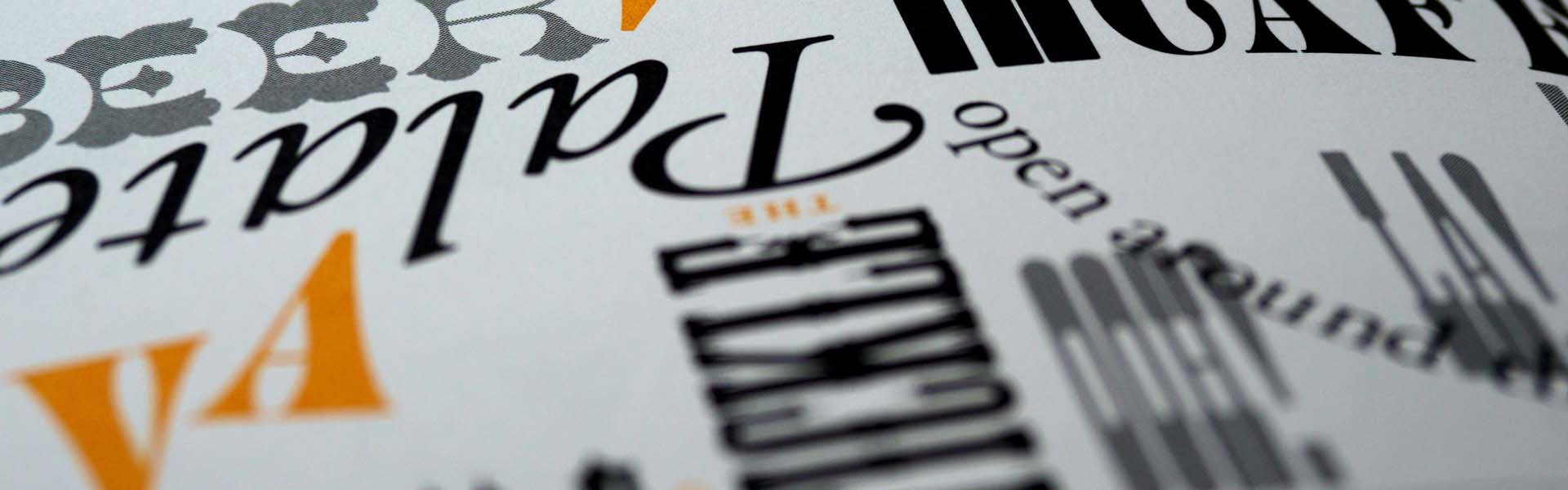
Typography can be defined as the art of designing letters. It is the discipline that studies the visual representation of text to ensure written language is effective.
At the same time, typography also refers to a set of alphanumeric characters designed with a consistent style and shared characteristics.
Types of typography
Without going into excessive detail, typefaces can generally be classified into four main groups based on their morphology:
- Serif (roman)
- Sans serif
- Script (handwritten)
- Decorative (display)
In a future article on typography in graphic arts, we will explore these types and their characteristics in more depth.
Key aspects when choosing typography for your project
Typography helps communicate and reinforce the visual message of a brochure or poster, while improving readability. For this reason, the following aspects should be considered:
- Audience: The typeface should match the target audience. Designing for children is not the same as designing for adults.
- Type of text: The typography must align with the message being communicated. It may vary depending on whether the content is informative, promotional or educational.
- Text length: For long texts, it is advisable to use typefaces that do not tire the reader.
What should you consider when selecting a typeface?
When deciding which fonts to use, less is more. To improve readability, it is recommended to limit the use to one or two typefaces. Below are some key considerations to help you choose the most appropriate typography for your project:
- Balance font size, line length and line spacing: A font size between 8 and 11 points and a line length of 60 to 65 characters is ideal for good readability. If one of these factors changes, the others should be adjusted to maintain proper proportions and avoid reader fatigue.
- Ensure contrast between text and background: The best readability is achieved with dark text on a light background. If other background colours are used, ensure sufficient contrast. If the text is coloured, consider using heavier weights and larger sizes.
- Do not combine too many typefaces: Well-combined contrasting typefaces can create dynamic and attractive designs. However, using too many fonts in the same piece can lead to confusion and visual clutter.
We help you bring your project to life
At Artyplan, we support your business with expert advice in print production. Our team can guide you in selecting the most suitable typography to ensure readability, align with your target audience and effectively communicate your message.