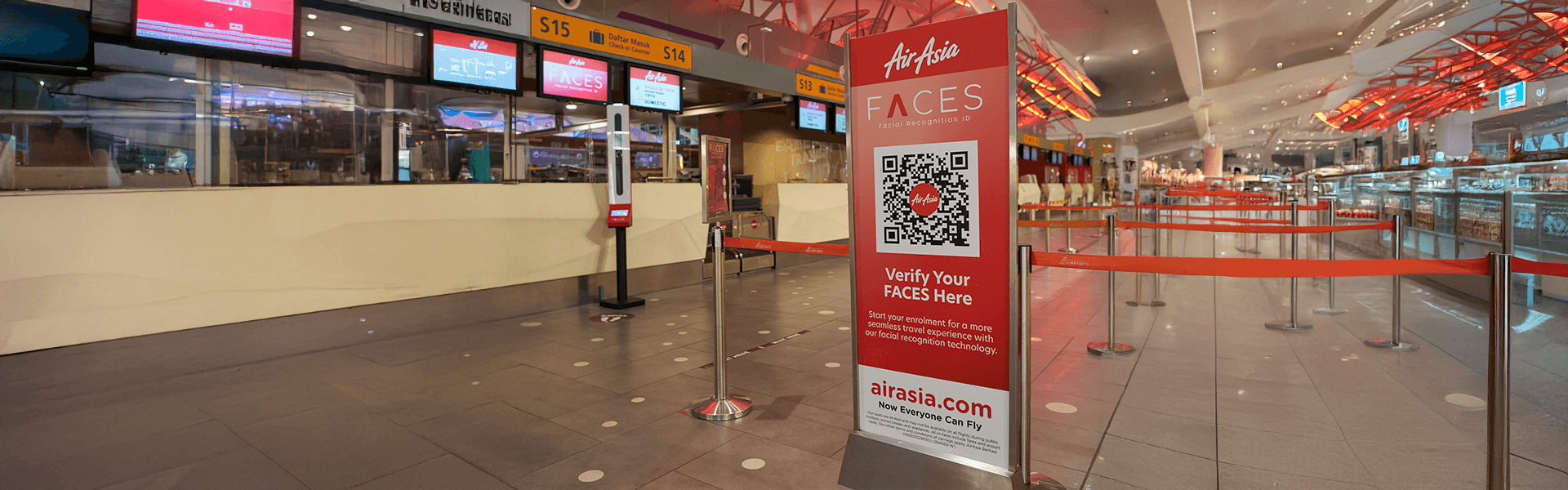
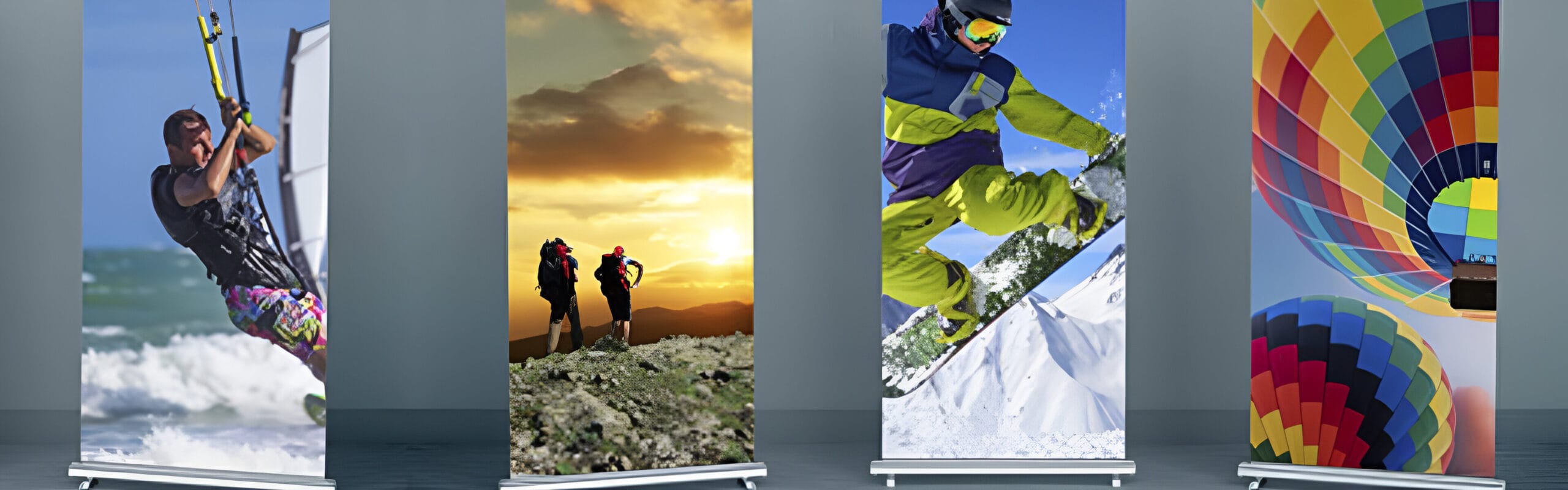
When promoting a product or service, businesses and organisations use a wide range of graphic elements to connect with their target audience and capture attention.
Sometimes, there is a clear idea of what to communicate, but not all concepts are easy to implement, as the final result can differ significantly from the initial idea. One promotional format that has become essential in recent years is the roll-up. A roll-up is a graphic display that can be used at events, trade shows, product presentations or press conferences. Although it may seem simple, effective design requires following specific guidelines.
What is a roll-up?
A roll-up is a portable promotional structure commonly used for advertising. It consists of a printed graphic on a PVC banner and a metal structure that allows the banner to be rolled and unrolled, as well as ensuring stability.
What should be considered when designing a roll-up?
A roll-up must be creative and visually appealing to effectively attract your target audience. While there are no strict rules, the following guidelines will help achieve the desired result:
- Logo and company information: The top section is one of the most important areas. The information placed here should immediately capture attention.
- Information flow: Content should be structured from left to right and from top to bottom. Clear hierarchy improves readability and effectiveness.
- Colours: Use colours that stand out while remaining consistent with your brand identity. As roll-ups are printed materials, designs should be created in CMYK colour mode to ensure accurate printing results.
- Readability: Space is limited, so include only essential information about your brand or promotion. Use clear, legible fonts and appropriate sizes.
- Consistency: The roll-up design should align with your other promotional materials to reinforce brand recognition.
Preparing a roll-up design for print
Before sending your roll-up design to print
The file must be adapted to its final configuration, as it will appear once produced.
Ensure the file matches the final roll-up dimensions. Common sizes include 800/850/1000/1200/1500/2000/2400 mm width and approximately 2000 mm height.
Check that all images have sufficient resolution to avoid pixelation during printing.
Leave approximately 4 cm of bleed to ensure safe margins and prevent important elements from being cut.
Create a reserved area, as the bottom 10 cm of the banner will be rolled into the structure.
Save the file in PDF format with a minimum resolution of 150 dpi. This format preserves fonts, images, graphics, layouts and colours.
Artyplan helps you design your roll-up
If you have designed a roll-up but are unsure whether it is ready for print, contact our team. Our experts in print production and print centre services will advise you and help adapt your design for optimal results.