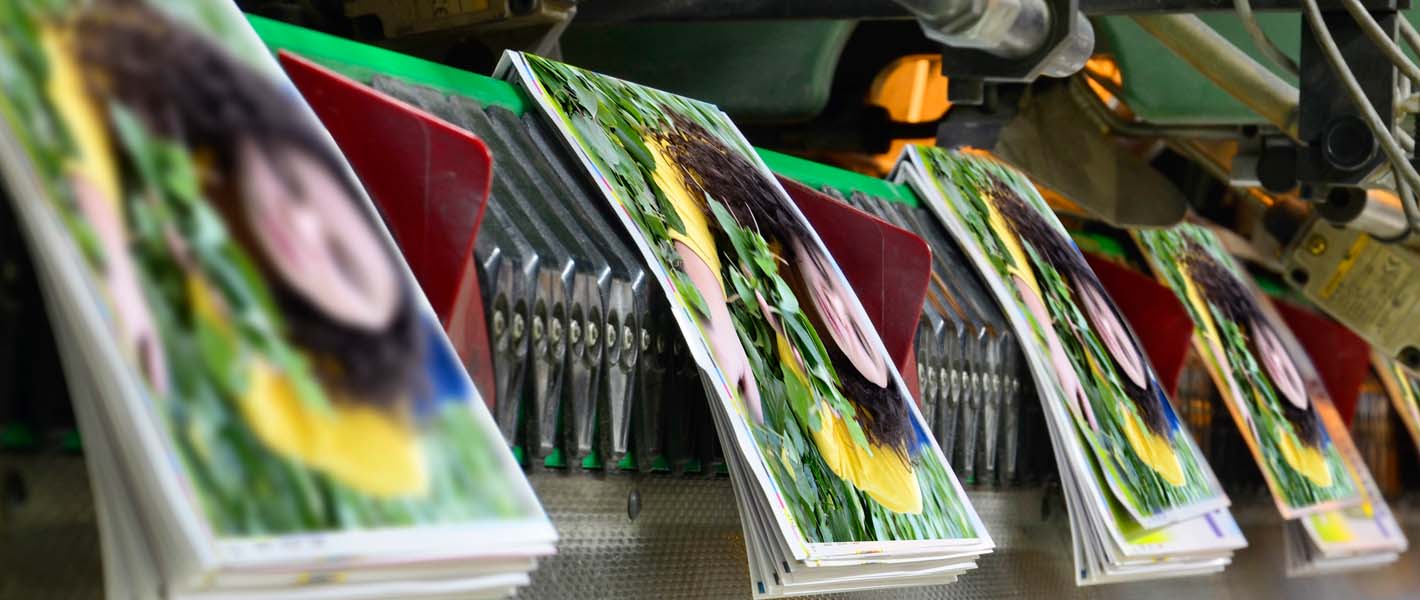
Digital printing involves printing a file on virtually any material, with small-format printing being the most widely used. Do you know it?
What is small-format printing?
Small-format printing refers to printing carried out in sizes up to 47 cm x 32 cm. It is used, above all, to establish effective and personal communication with your customers.
It allows printing on a wide range of substrates: standard paper, cardboard, self-adhesive vinyl, fabrics and polyester, among others. The requirement is that the material used has an approximate weight between 80 and 300 gsm.
Another of its key characteristics is that it supports the application of special treatments such as folds, cuts or die-cutting, laminations, binding and stamping. As a result, you obtain highly refined and visually impactful products. In this sense, small format is not at odds with quality.
Technological advances in digital printing enable high-speed production. Professional printers reach very high output speeds, meaning that in just a few hours we can produce a significant volume of copies.
What are the main examples of materials printed in small format?
Generally, these graphic materials are aimed at an end user who will interact with them in a personal way, often in a more private context. However, the objective is always to generate a positive brand image.
Below are the most common formats used today:
- Flyers. Printed materials on one or two sides with engaging information about a specific product or service.
- Leaflets These materials display informative and persuasive content about the features of brands, products and services. They can be sent by post, hand-delivered or distributed in person, depending on the case. They vary according to the number of folds: diptychs (two panels), triptychs (three panels), quad-folds (four panels), etc.
- Business cards. Although new technologies and online contacts once seemed likely to replace them, they remain highly relevant. They are essential when meeting or introducing yourself to professionals of interest.
- Stickers. Advertising or informational formats printed on an adhesive substrate. They can be removable or permanent. You can use them to display contact details, promote services or reinforce brand presence.
- Postcards. Considered the emails of the 20th century, they were traditionally used for personal messages. Today, they have become a commercial format widely used by many brands.
Other small-format media
Below are other less common but still widely used small-format applications in everyday business:
- Letters and menus. Despite the rise of QR codes, customers in the hospitality sector still prefer printed formats when choosing what to order.
- Invitations. Highly relevant for corporate, commercial and social events such as weddings, baptisms, communions, product launches, tastings or meetings—especially when accompanied by printed invitations.
- Calendars. Pocket or desk formats are not usually considered large format. They are a valuable promotional gift that keeps your brand visible throughout the year. They are also widely used as planning and organisation tools.
- Notepads. We continue to take notes, sketch ideas and perform calculations on paper. These small notebooks are practical and often become everyday communication tools.
As you can see, this type of printing continues to play an important role in today’s commercial and human relationships. The speed and quality achieved through modern printing technologies contribute to its popularity and growing demand.
Artyplan, the partner your business needs
At Artyplan, we offer a comprehensive small-format printing service. Experience, resources, professionalism and personalised attention are at your disposal.