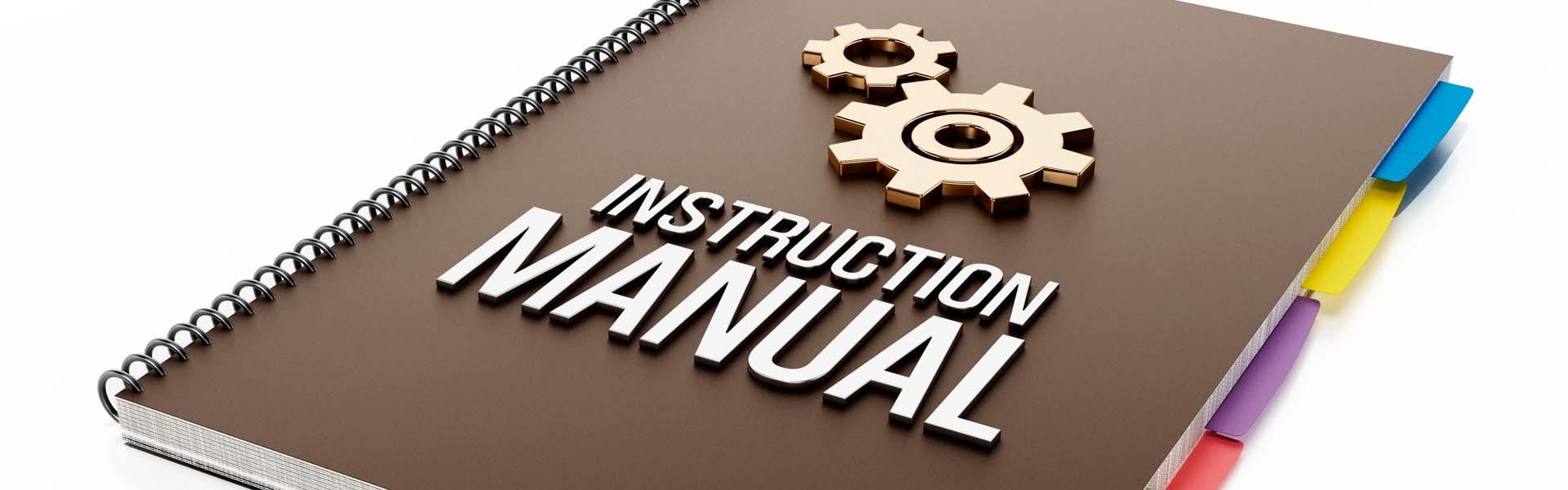
Manual printing adds value to your business and to the quality of your service, as it provides the guidelines that define how to carry out tasks efficiently and effectively to achieve established objectives. In addition, manuals are essential as they allow users to understand how a product, tool or service works.
Types of manuals
In the business environment, there can be as many types of manuals as there are products and tasks. These can generally be divided into two groups:
User manuals
Companies that create consumer products, whether for the general public or for other businesses, usually include a printed user manual or instruction manual so that users understand how to use the product correctly and achieve the expected results.
Corporate or behavioural manuals
These manuals are intended for internal use within businesses, as they explain the different processes carried out internally. They define the guidelines employees must follow, both from a production perspective (procedures to follow) and operationally (tasks each individual performs according to their role), for example: dress code, behaviour standards or emergency procedures.
How is a manual printed?
When preparing a manual for printing, it is important to define several aspects during the file design stage.
Format
The size of the manual will depend on its purpose. The most important factor is that it should be practical and easy for users to read.
Common formats for instruction manuals include: A6 (10.5 × 15 cm), A5 vertical (15 × 21 cm) or horizontal (21 × 15 cm), A4 vertical (21 × 29.7 cm) or horizontal (29.7 × 21 cm), and square format (21 × 21 cm).
Paper type
There are many paper options available for manual printing. Paper can have a matte or gloss finish, with gloss recommended when the manual includes photographs. For more sustainable options, recycled paper can also be used, reinforcing your business’s environmental image.
Paper weight (grammage) refers to the weight per square metre. Covers typically range from 160 to 300 gsm, while inside pages are usually between 75 and 80 gsm. For manuals, a recommended range is between 115 and 155 gsm.
Finishing
When defining finishes, several factors must be considered, such as the type of binding. Binding will depend on the number of pages and the desired corporate image.
Available options include: hardcover binding (for storing printed materials), softcover binding, spiral binding, and saddle stitching (stapled binding).
Once the binding type is defined, the cover can be customised with different finishes such as gloss lamination, matte lamination, soft-touch lamination, foil stamping (gold/silver), or spot UV varnish.
Therefore, before printing the manual and preparing the final file, all these aspects should be clearly defined to achieve the best possible result.
Not sure where to start with manual printing?
If you are unsure which option is best for your manual based on its characteristics and your corporate image, our Customer Service team will advise you to ensure the best outcome.