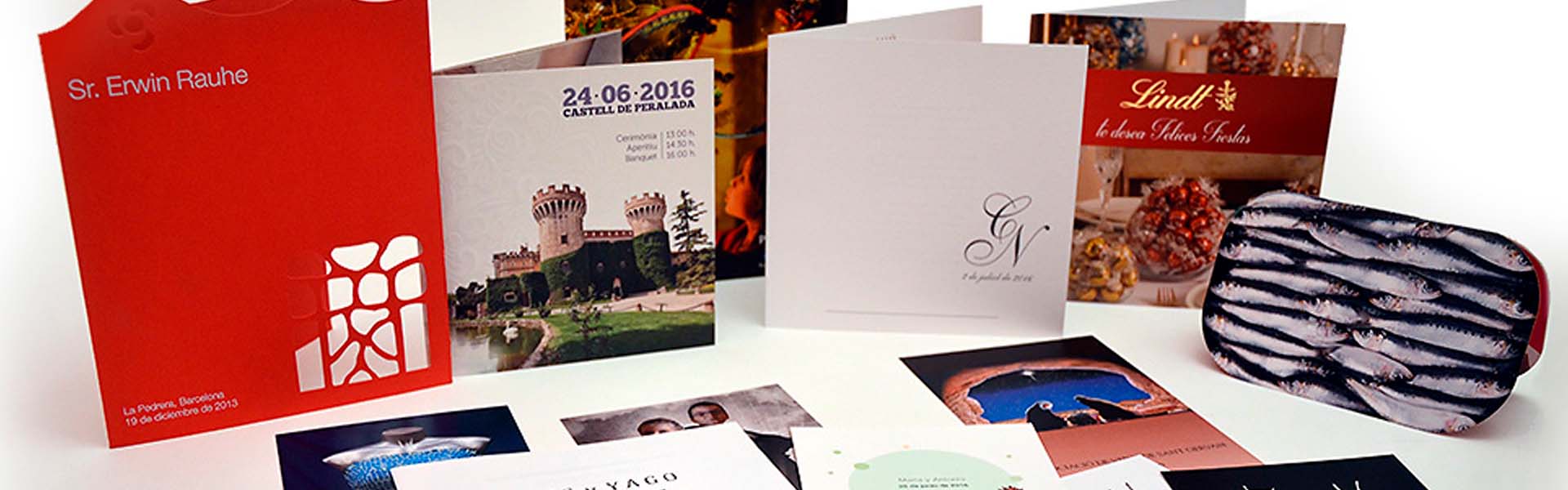
Even in the digital age, printed brochures remain essential within your business communication activities. They are a simple, cost-effective resource that is generally useful for increasing visibility and presenting products or services. Thinking it could be relevant for your brand to invest in them? Keep reading and we will clarify any doubts.
What are brochures?
Brochures are presentation cards for your business or your catalogue. They are printed on paper or similar materials and are aimed at clients, shareholders, suppliers, collaborators or the general public.
They are used to deliver valuable information to recipients. In addition, their content and design generate an image in the audience. With careful work, they can achieve the desired impact.
Their size is smaller than catalogues, books or magazines, although larger formats also exist. In these cases, they usually include multiple folds to make the final size manageable.
Their function is multiple. At trade shows and events, they are distributed to provide information to an interested audience. In other situations, they become a reminder of a conversation or a pending negotiation. They also often serve as a tool for intermediaries to share content with potential buyers.
They typically include text, graphics, photographs and other valuable elements. Their informative function is combined with a clearly persuasive, promotional and engaging approach. Once in the hands of your audience, they represent your brand and its values. In short, they are a portable showcase that potential clients can take with them.
What types of brochures are there?
Below are the main types of brochures available on the market:
- Flyers: A single sheet, printed on one or both sides. It is the most basic format and therefore the most cost-effective. It is often included as an insert in other publications, but can also be distributed independently, for example at shop entrances, restaurants or clubs to attract visitors. You have probably received more than one in your letterbox.
- Diptych: A printed piece with two panels, resulting in four pages. It fulfils a similar function to the previous format, allowing information to be organised in a more structured way. Typically, the cover attracts attention, the inside develops the content and the back cover includes the call to action.
- Triptych: Three panels (six pages), offering greater capacity to develop broader content. It is widely used as a handout on tourist routes or as a guide in museums. It requires a clear structure to ensure readability, understanding and ease of navigation.
- Quadriptych: Four panels (eight pages), an extended version of the previous formats. Its larger capacity allows more information to be included or larger, more impactful images.
- Fold-out (accordion / map format): More than four panels. Commonly used for plans and maps. When fully unfolded, they reach a large size.
According to the type of fold
Another key factor is how the brochure is folded, as this affects the organisation, presentation and reading order of the content. The most common folds are:
- Accordion fold: Consists of two or more parallel folds, where each panel folds in the opposite direction to the previous one. It is the most suitable option for brochures with many panels, except for diptychs, quadriptychs or fold-out formats. When unfolded, it can be opened from either side. The content must be arranged so that both sides maintain a coherent message.
- Gate fold (window fold): The outer panels fold inward towards the centre. Once opened, the panels can be unfolded again. It is also recommended to leave blank inner panels to facilitate folding.
- Roll fold: The panels fold over themselves. When opened, the reader accesses the content progressively, panel by panel.
- Cross fold: One of the most complex folding methods. It requires content to be organised coherently and independently across sections. It is widely used for maps, street guides or plans. It can result in formats with 8, 16 or even 32 panels.
At Artyplan, we specialise in print production projects. We provide proven experience and reliable results for all types of clients. Contact our team: we will support your business throughout the entire process, helping you achieve the brochure your business needs.