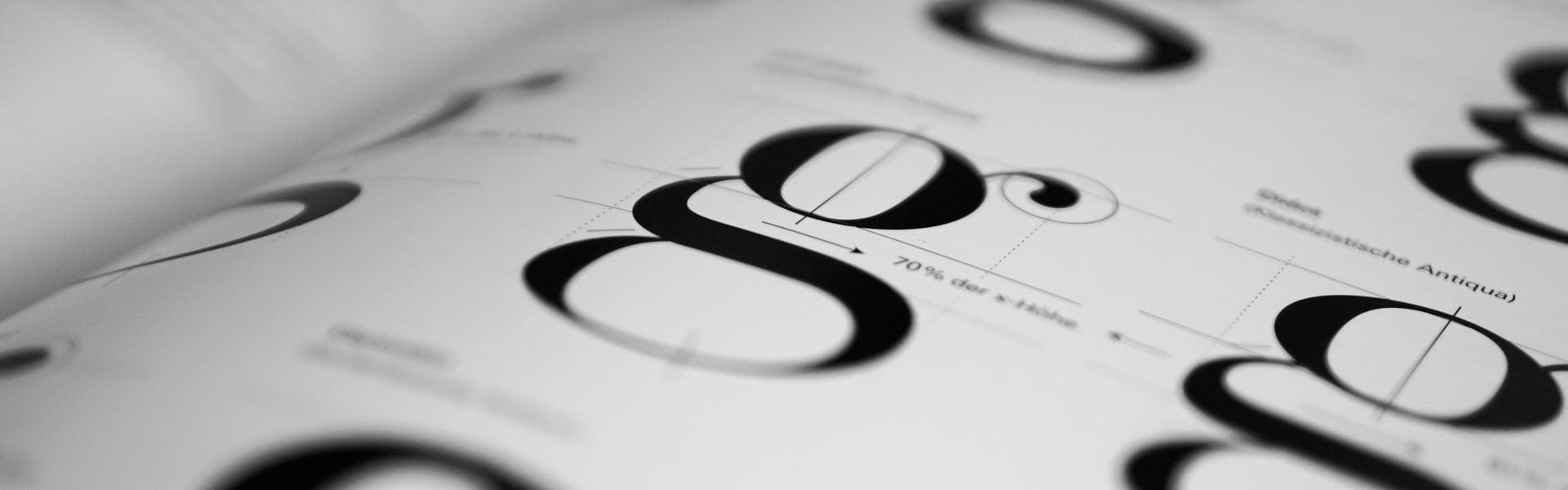
Typography is one of the key elements in graphic arts, communication, advertising, marketing and even popular culture. It helps us better understand messages and gives texts a specific style.
What is typography?
Typography has multiple definitions, and its etymology comes from the Greek typos (“mark”) and graphia (“writing”).
In practical terms, typography is the discipline that organises letters and text so that they are legible, clear and visually appealing to the reader.
It defines a specific style, appearance and structure. It is composed of typefaces, which convey emotions and communicate messages. In short, typography brings text to life.
What types of typography are there?
Based on morphology, there are four main typographic families:
Serif (roman)
These typefaces include small finishing strokes or “serifs” at the ends of letters. They provide a classic and formal appearance, often associated with traditional, institutional or academic contexts
Sans serif
These typefaces do not include decorative strokes. They are considered more minimalist and are known for their readability. They are widely used in commercial and editorial contexts and convey modernity, neutrality and clarity
Script (handwritten)
These imitate human handwriting. They are more fluid and often connected, usually with a slight rightward slant, similar to cursive writing
Decorative (display)
Also known as display typefaces, they are designed to attract attention. They convey creativity and personality, although they are generally less readable and are used for specific visual purposes
Which are the most commonly used in graphic arts?
You are likely familiar with some of the most widely used typefaces in graphic arts. Sans serif fonts such as Helvetica, Trajan or Futura are among them. Others like Bodoni, Gotham or Rockwell are also commonly seen in various designs.
What do they have in common? Their readability, clarity and, in many cases, a modern style.
How does typography influence a printed text?
Typography defines the character, readability and overall style of a text. It can even influence the reader’s perception.
Factors such as size, line spacing and contrast are essential when choosing a typeface. Very small sizes or low contrast can make texts difficult to read, while excessive line spacing can slow down reading speed.
To convey modernity, clarity and simplicity, many designers opt for sans serif typefaces. However, the choice ultimately depends on your audience and the values you want to communicate.
Artyplan advises you to ensure your graphic project is successful
At Artyplan, we have a team of specialists who provide professional and personalised guidance to ensure your graphic project delivers the best results. We work across both large and small formats, including print production, corporate stationery, packaging and web-to-print solutions. We advise your business on selecting the most appropriate typography for editorial, visual communication or marketing projects.