
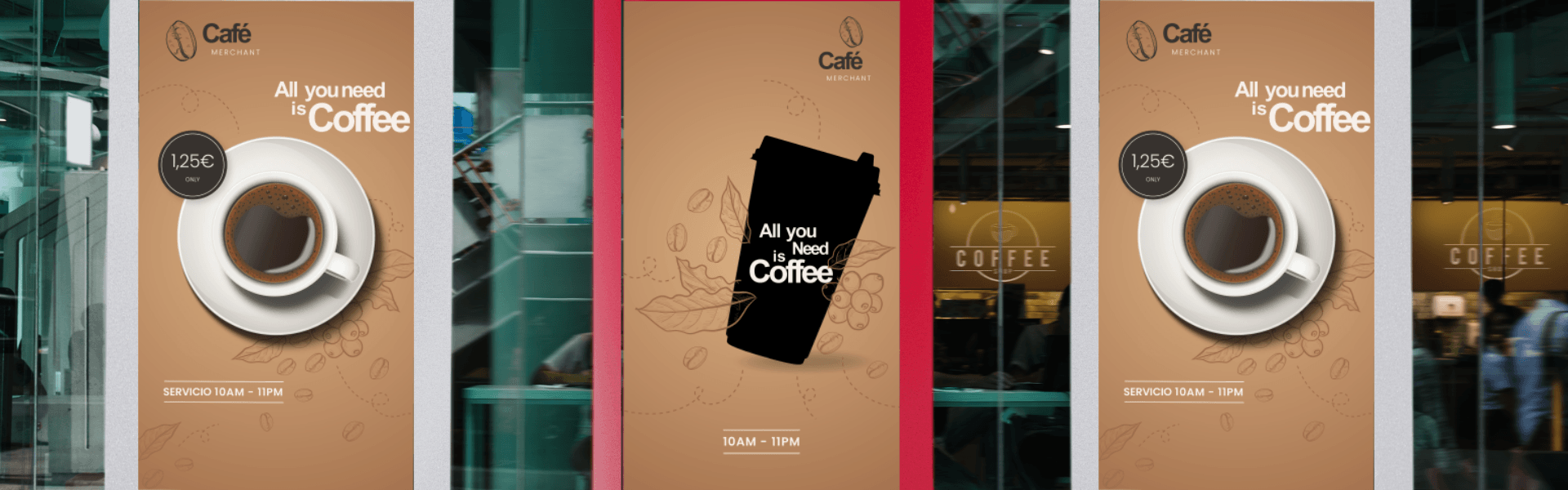
Advertising posters are an effective and powerful way to communicate messages and capture the attention of passers-by. There are different types of advertising posters, whether to promote an event, a product or simply increase the visibility of your business.
Below, we present the five basic elements or characteristics that every effective advertising poster should include.
- Clear and concise message
A poster should communicate its message clearly and directly. You only have a few seconds to capture the viewer’s attention, so the message must be brief and easy to understand. Use short phrases and avoid complex language. Remember that the main objective is for people to quickly understand that it is an advertisement. - Attractive and balanced design
Use vivid and contrasting colours to highlight important information while staying aligned with your brand image to strengthen recognition among your target audience. Include images or graphics that reinforce the message and create a lasting visual impact. Pay attention to visual hierarchy by highlighting the most important elements through size, colour and positioning. - Call to action
A good advertising poster should include a clear and persuasive call to action that highlights the benefits of responding to the message. Whether you want people to visit your shop, call by phone, visit your website or attend an event, make sure the desired action is clearly communicated. - Relevant and readable information
Limit the information on your poster to the most relevant details. Avoid overwhelming viewers with too much information or confusing messages.
Ensure the text remains legible from different distances and viewing angles. - Strategic placement
Place your poster in a location where your target audience can easily see it. This may include billboards in busy areas, walls of buildings in strategic locations or posters displayed in shops and businesses related to your industry.
Choosing the right location significantly increases the chances of your message reaching the right audience.
Types of advertising posters: strengthen your campaign message
There are different types of advertising posters, each with its own characteristics and objectives. Below are some of the most common formats to help you choose the right style for your next campaign.
- Promotional posters
These posters promote a specific product, service or event. They usually include striking images, relevant information and a persuasive call to action. Promotional posters are ideal for generating interest and increasing sales. - Informational posters
Informational posters are used to communicate important information to a specific audience. They are commonly used in offices, educational institutions and public spaces.These posters usually feature a simple and clean design to ensure the message is easy to understand. - Signage posters
Signage posters are essential for providing guidance and orientation in both public and private spaces. They may include directions, services, rules or relevant information for visitors. They are characterised by clear design, concise content and easy-to-read icons and text. - Welcome posters
Welcome posters are used to greet people in specific places such as events, conferences or commercial establishments. They often include friendly messages along with images or illustrations related to the event theme. These posters help create a welcoming environment and contribute to making a positive first impression.
Print quality and materials
Do not forget to consider print quality and the materials used for your poster.
Work with a reliable print production provider to ensure high print quality. In addition, choose durable materials appropriate for the environment where the poster will be displayed, whether indoors or outdoors.
High-quality printing and suitable materials ensure your poster maintains a professional and long-lasting appearance.