
Within the screen printing industry, the latest technology to emerge has been digital printing, using machines that share certain similarities with traditional offset printing. In large or medium-sized print facilities, we can find both types of printing. Each has its differences, although in the future they may converge—at least in terms of achievable quality and applications.
For now, these two technologies should be considered separately, even though in both cases we print on a paper substrate using mineral or vegetable-based inks within a four-colour process. These are cyan, magenta, yellow and black.
What is offset printing?
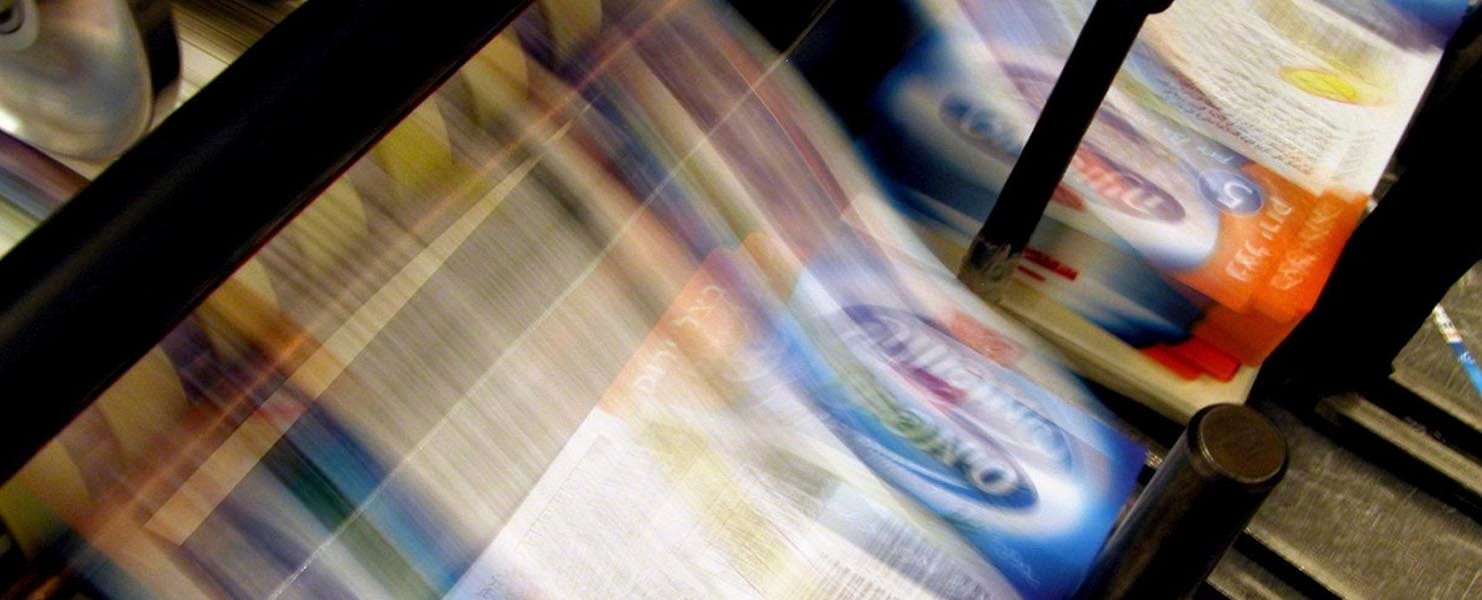
In this system, the desired image is first created on an aluminium plate (printing plate), then transferred onto a rubber blanket and finally printed onto the substrate. Its operation is based on the chemical and physical repulsion between grease-based substances and water.
And digital printing?
For its part, digital printing starts from a pre-designed file that is sent directly to the machine, where it is reproduced through a virtual plate (no physical plate required). This technology acts on the printing matrix using liquid ink cartridges that receive an electrical charge. The image is then transferred onto a rubber blanket and finally onto the substrate. This process ensures maximum ink adhesion.
Differences between both
In practical terms, the main difference between the two types of printing lies in the production process and how each technology handles print runs and customisation.
Offset printing requires the creation of printing plates, which makes it more efficient for large volumes, as unit costs decrease with higher quantities. It is particularly suitable for long runs where consistency and cost optimisation are key.
Digital printing, on the other hand, does not require plates. This allows for faster setup times, greater flexibility and the possibility to personalise each print. It is the most efficient option for short runs and variable data jobs.
In practical terms, what we have experienced from the first type of printing to the second is a shift from analogue plates to digital ones.
Although the differences are becoming less pronounced, the advantages of traditional printing remain clear: the ability to produce large print runs more economically and quickly, use special inks, and achieve larger formats.
At present, all outputs are identical, and printed materials are delivered wet, which means a significant drying time is required. Some colour instability may also occur during the process.
By contrast, digital printing enables very short runs to be produced more quickly and cost-effectively, with immediate availability. As a result, no drying time is required, making it ideal for urgent jobs.
This outlines the main advantages and limitations of both printing methods, with digital printing being the more innovative of the two. Our Customer Service team will advise your business on the most suitable option for your print project.