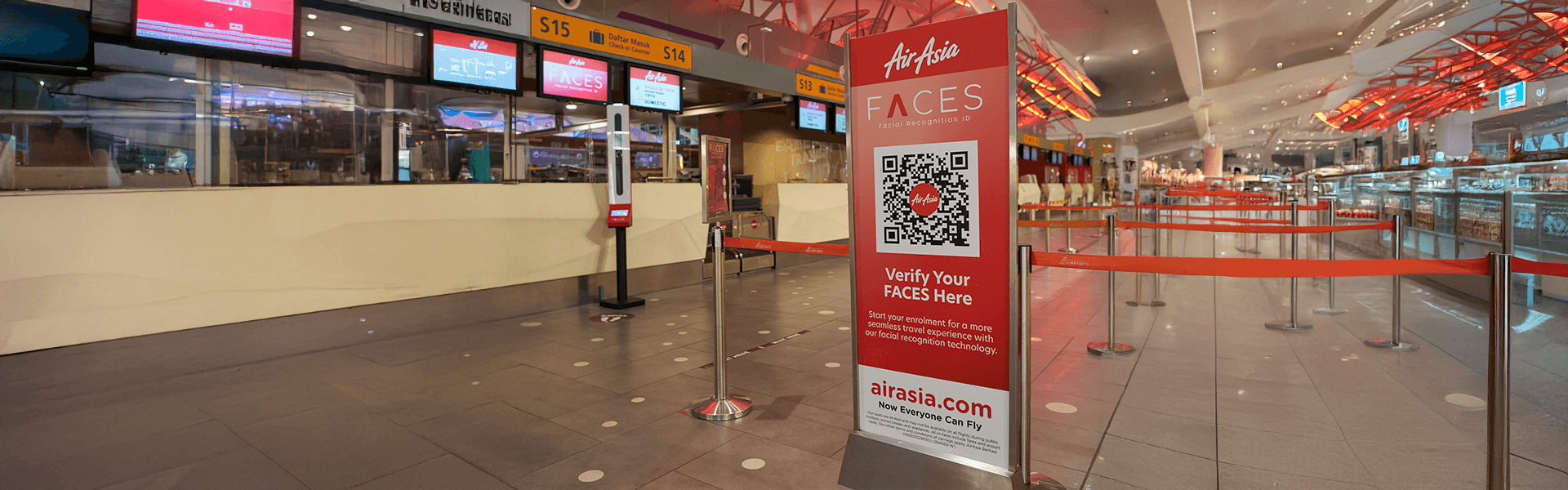
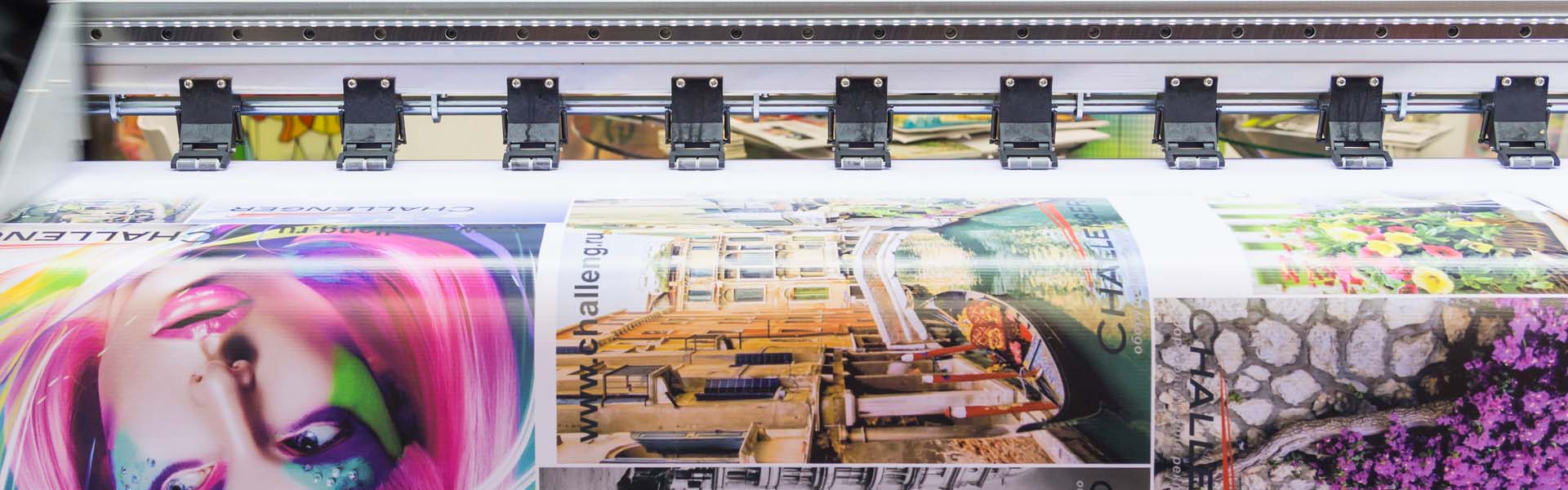
Large-format printing is high-resolution printing used to convey images and messages on large surfaces.
In this type of printing, instead of printing sheet by sheet, roll-fed systems are used, where the material is fed continuously.
Characteristics of large-format printing
To distinguish large-format printing from small-format printing, beyond the size of the file, it is important to consider its specific characteristics:
- Large-format printing is designed to be highly visible.
- The typefaces used are legible from a distance, so selecting the appropriate size and contrast is essential.
- Clear and concise messaging is key.
What substrates are used in large-format printing?
Large-format printing typically uses two main types of substrates:
On one hand, rigid substrates, which are homogeneous structures in large sizes where printing can be applied directly or indirectly. Examples include Forex (rigid PVC board), foam board (lightweight rigid display panel) and honeycomb board.
On the other hand, flexible substrates, which are supplied in rolls. The most commonly used are self-adhesive vinyl and PVC banner (durable flexible material for signage).
Key aspects when preparing a large-format file
It is important to consider several parameters when preparing files for large-format printing to ensure optimal results. Below are the key factors:
1. Size
Large-format printing generally refers to formats exceeding standard DIN sizes, from A2 (420 × 594 mm) up to A0 (841 × 1189 mm) and beyond.
2. Resolution
In general, large-format printers deliver high-quality results, so it is not always necessary to design at full scale resolution. RIP software (Raster Image Processor – print data processing system) automatically adapts files to the required output format.
A common approach is to work using a scale/DPI ratio. For example, a scale of 1:10 at 300 DPI means that a final design of 3 × 3 metres can be prepared as a 30 × 30 cm file.
3. File format
It is important to define print quality and application. Common file formats for large-format printing include PDF, TIFF and EPS.
4. Images
Images should be of the highest possible quality and resolution. A recommended resolution is between 150 and 300 DPI. If using images from mobile devices or the internet, ensure they can be scaled without losing quality.
Artyplan prints your large-format projects
At Artyplan, we offer a wide range of solutions for large-format printing. With extensive experience in print production and on-site installation, we help your business find the most suitable solution for each project.