When discussing printing, the first things that usually come to mind are ink, paper and printing machines. However, there is another important stage in print production that often goes unnoticed: die-cutting. In this article, we explore the role of die-cutting in the print process and how it can help your project stand out.
What is die-cutting in printing?
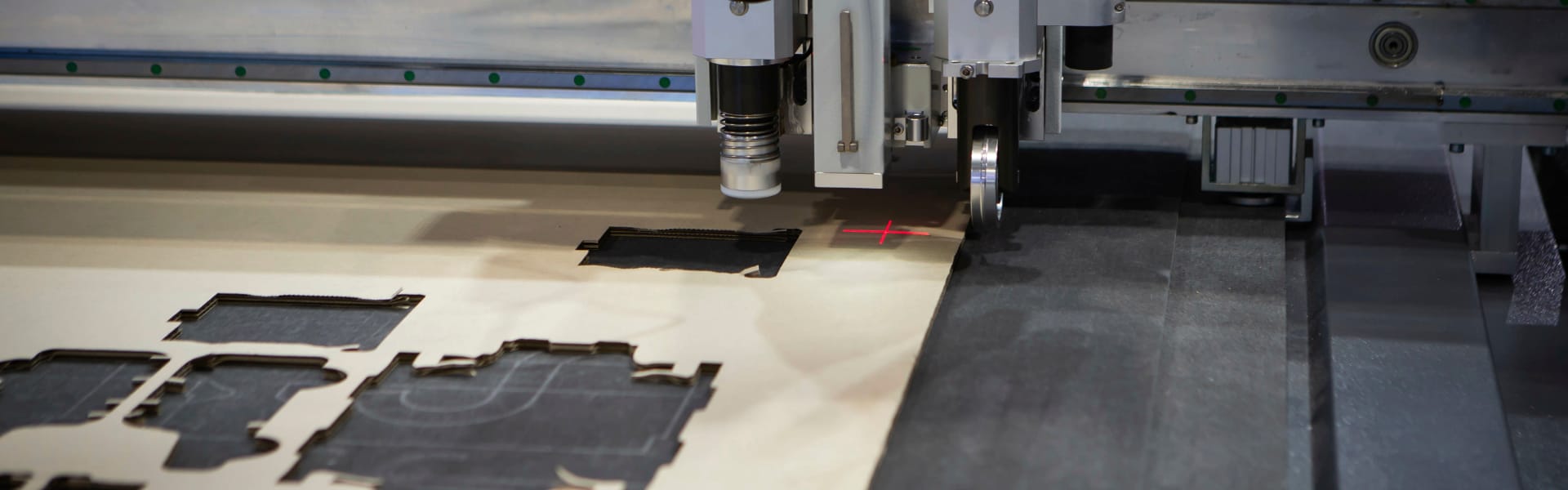
Die-cutting is a process used during print finishing to cut, emboss or shape materials such as paper, cardboard or plastic. The design of the die can vary depending on the required shape of the final material, ranging from simple forms such as circles or rectangles to more complex designs.
There are different types of dies, commonly used to highlight specific design elements and add creativity and professionalism to printed products.
Applications in print production
Die-cutting is used across many sectors, including education, culture, public administration, food, pharmaceuticals and events. These are some of the areas where die-cut printing is most frequently used.
Die-cutting in packaging
Die-cutting plays a key role in the creation of customised packaging, allowing precise cuts and folds that contribute to the final product design.
Business cards
Business cards with die-cut edges or custom shapes can capture attention more effectively than a standard card.
Labels and stickers

The die-cutting process allows labels to be cut into complex shapes tailored to the specific needs of the product or brand.
Brochures, posters and other advertising materials can also benefit from the precision offered by die-cutting, enabling unique designs.
Advantages of die-cutting in digital printing
Precision and consistency
Die-cutting enables highly precise cuts that would be impossible to achieve manually. This is particularly important for products such as labels, packaging and business cards.
Each cut is identical, ensuring uniformity across the entire production run.
Unique and customised designs
One of the main advantages of die-cutting is the ability to create unique and customised designs that capture customer attention. This is especially valuable in marketing campaigns where differentiation is essential.
Versatility
Die-cutting can be applied to a wide range of materials and marketing products, from business cards to product packaging. This makes it a versatile solution for many print production needs.
Production efficiency
With modern technology, die-cutting processes have become more efficient than ever, allowing faster production times and reduced costs. This is particularly beneficial for companies that require large volumes of printed materials within tight deadlines.
Impact on business marketing
Improving brand perception
Die-cut marketing materials are not only visually appealing, but they also convey an image of quality and professionalism. This can improve brand perception and help your business stand out in a competitive market.
Higher conversion rates
The visual impact and singularity of die-cut materials can lead to higher conversion rates. This translates into increased sales and a stronger return on investment for your marketing campaigns.
Strengthening customer loyalty
Using die-cut elements in your marketing materials can contribute to a more memorable customer experience, helping build long-term customer relationships.
Die-cutting in print production offers a range of advantages that can significantly impact your marketing strategy. From creating distinctive designs to improving production efficiency, die-cutting is a powerful tool for companies looking to elevate their visual communication and marketing materials.