The rise of digital communication does not mean that traditional marketing media have lost their relevance. In a context where creating memorable brand experiences is key, portable display systems continue to play a strategic role for organisations. Let’s take a closer look.
What are portable display systems?
In general terms, these are printed display formats that can be easily assembled and dismantled, making them simple to transport from one location to another. In other words, they are autonomous advertising solutions that your business can use whenever needed.
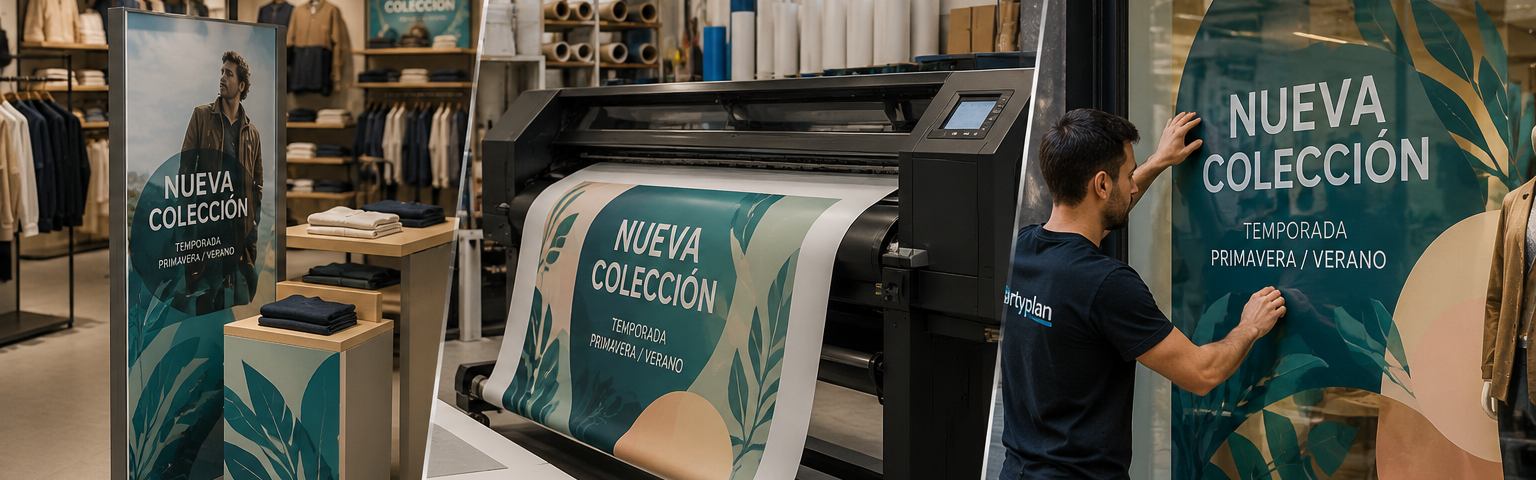
Their applications are wide-ranging, from corporate decoration in retail environments to visual communication at trade shows, events and conferences.
Elements, materials and designs and their benefits
Their main advantage is mobility. These systems allow large-format graphics to be transported in a compact format. When needed, the structure can be assembled quickly and intuitively, creating a high-impact, robust and fully functional display.
In addition to their visual impact, originality and size, they offer further benefits:
- Visibility
- Positive brand image
- Ease of assembly and transport
Main types
There is a wide range of portable display systems available. In many cases, they can be combined or customised to meet specific needs. Below are the most common options:
-
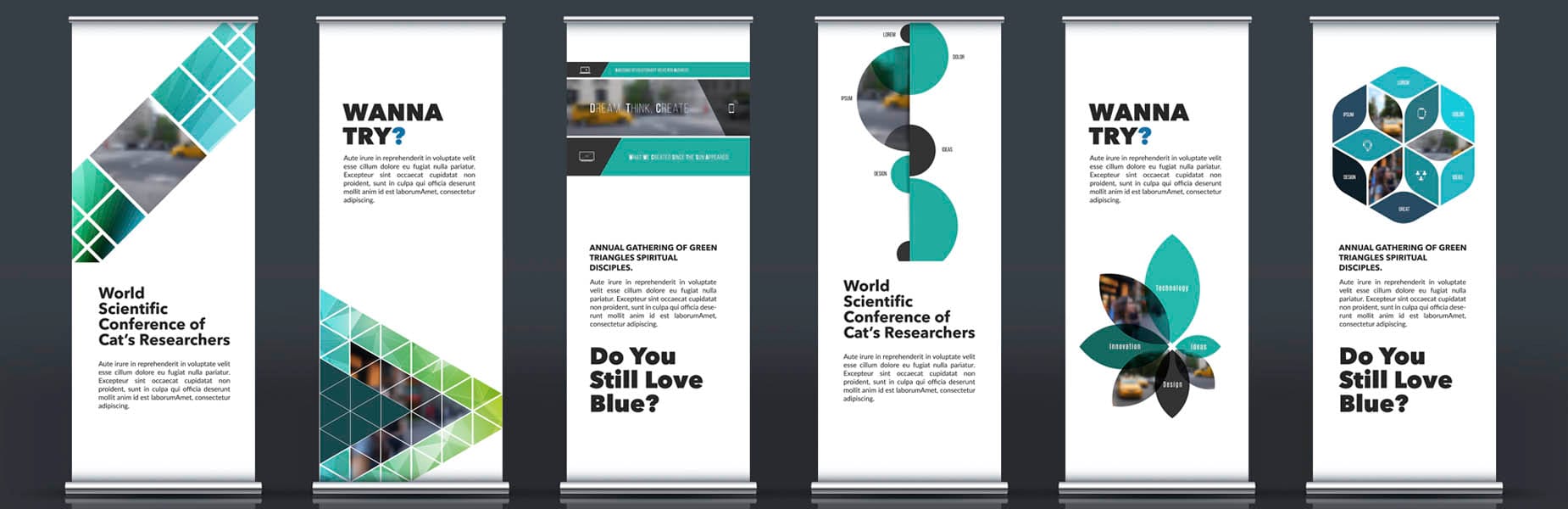
- Roll-ups. Advertising displays that are usually self-standing and cost-effective. They are highly versatile and practical.
- Pop-ups. Similar to roll-ups, but larger and more complex. They are often used as photocall backdrops at events. They typically consist of a structural frame supporting the printed graphic, with fastening systems such as Velcro, clips or other quick-fix solutions.
- Flags. Installed on poles, buildings or fixed structures such as lampposts. Their format is more compact and they are commonly used outdoors to enhance visual impact.
- Banners. Freestanding structures with graphic elements designed to move with the wind. They are often associated with beach environments but are also used in open outdoor spaces.
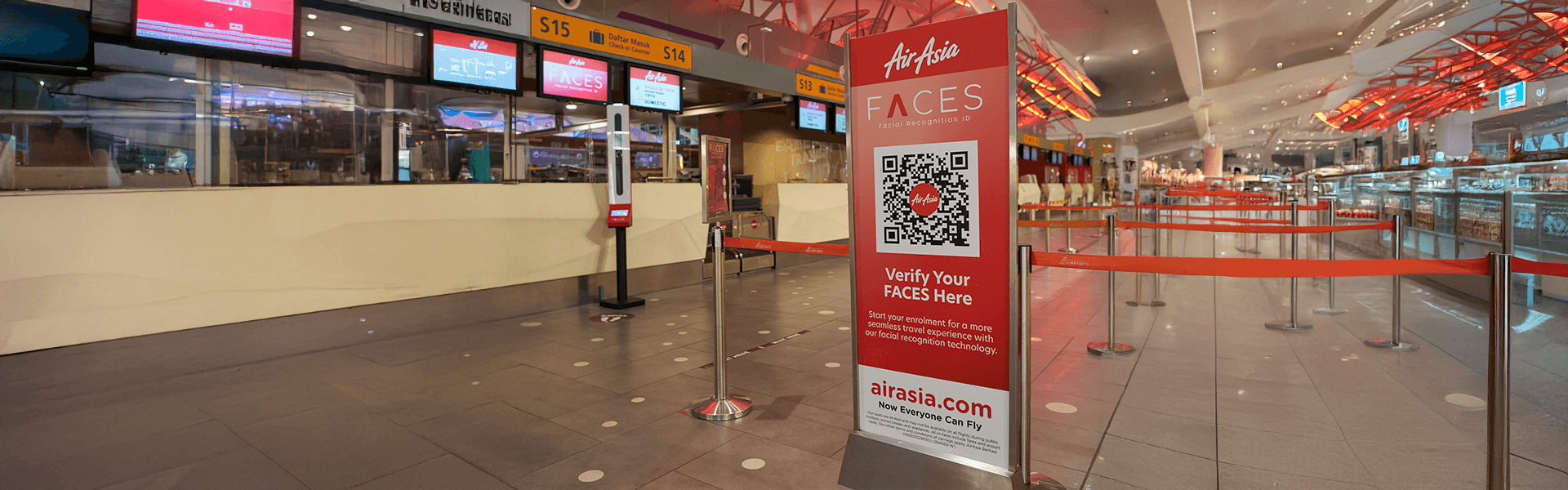
- Display stands. Informational display units designed to present both textual and visual messages effectively.
How are these systems structured?
All these visual communication solutions typically consist of three main components:
- Structure. Usually made of plastic or metal, with different quality levels depending on price and intended use.
- Printed material. There are multiple options, including PVC banner, photographic paper, polypropylene or textile materials.
- Lighting. Many of these systems incorporate lighting elements to enhance visibility, particularly in low-light conditions.
Artyplan, your trusted partner
If your business is considering these types of visual communication solutions, it is important to choose the right option and ensure high-quality execution. Our specialists will guide you in selecting the most suitable system and support you from design to print production.
At Artyplan, we support your business from the outset, advising on the best solution and optimising every stage of the process. Our team ensures the highest quality graphic results.
Contact us to learn more about our portable display systems and open the door to new opportunities for visibility and brand impact.